

Variable Speed Pool Pumps

 365-Day Warranty
30-Day Return
Free Us Shipping
365-Day Warranty
30-Day Return
Free Us Shipping
 365-Day Warranty
30-Day Return
Free Us Shipping
365-Day Warranty
30-Day Return
Free Us Shipping
NEW ARRIVALS RECOMMENDED FOR YOU


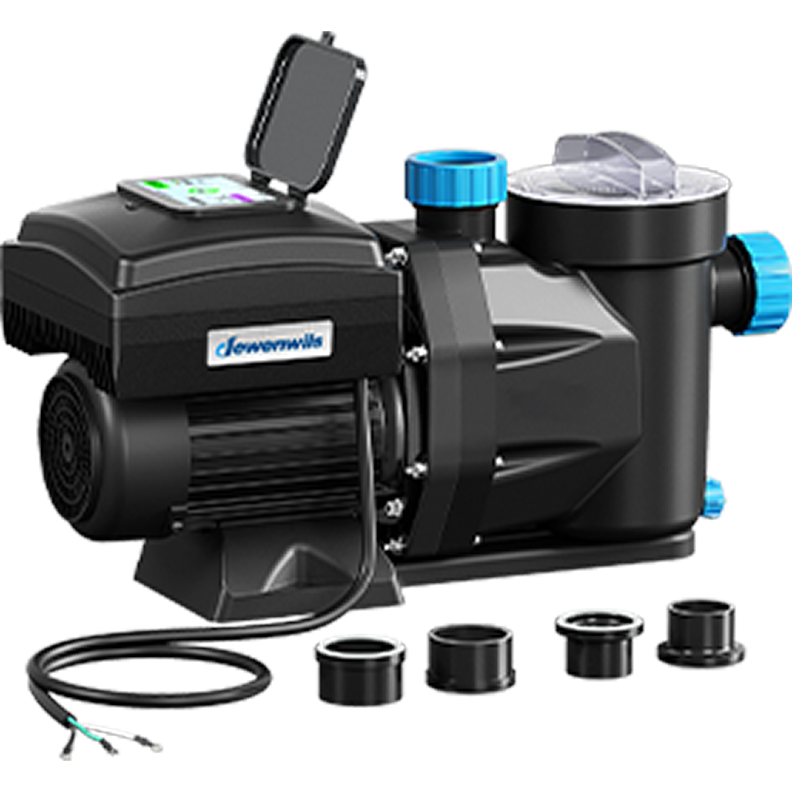
1.5 HP/3 HP VARIABLE SPEED POOL PUMP
Find the right fit for your pool.
Get more details here.

1.5 HP Variable Speed Pool Pump - SHSPP01ARegular price
$56999
Sale price
$56999
Regular price
|

3 HP Variable Speed Pool Pump - SHSPP02ARegular price
$66999
Sale price
$66999
Regular price
|
|
|
|
|
|
|
|
|
|
|
|
|
|
|
|
|
|
|
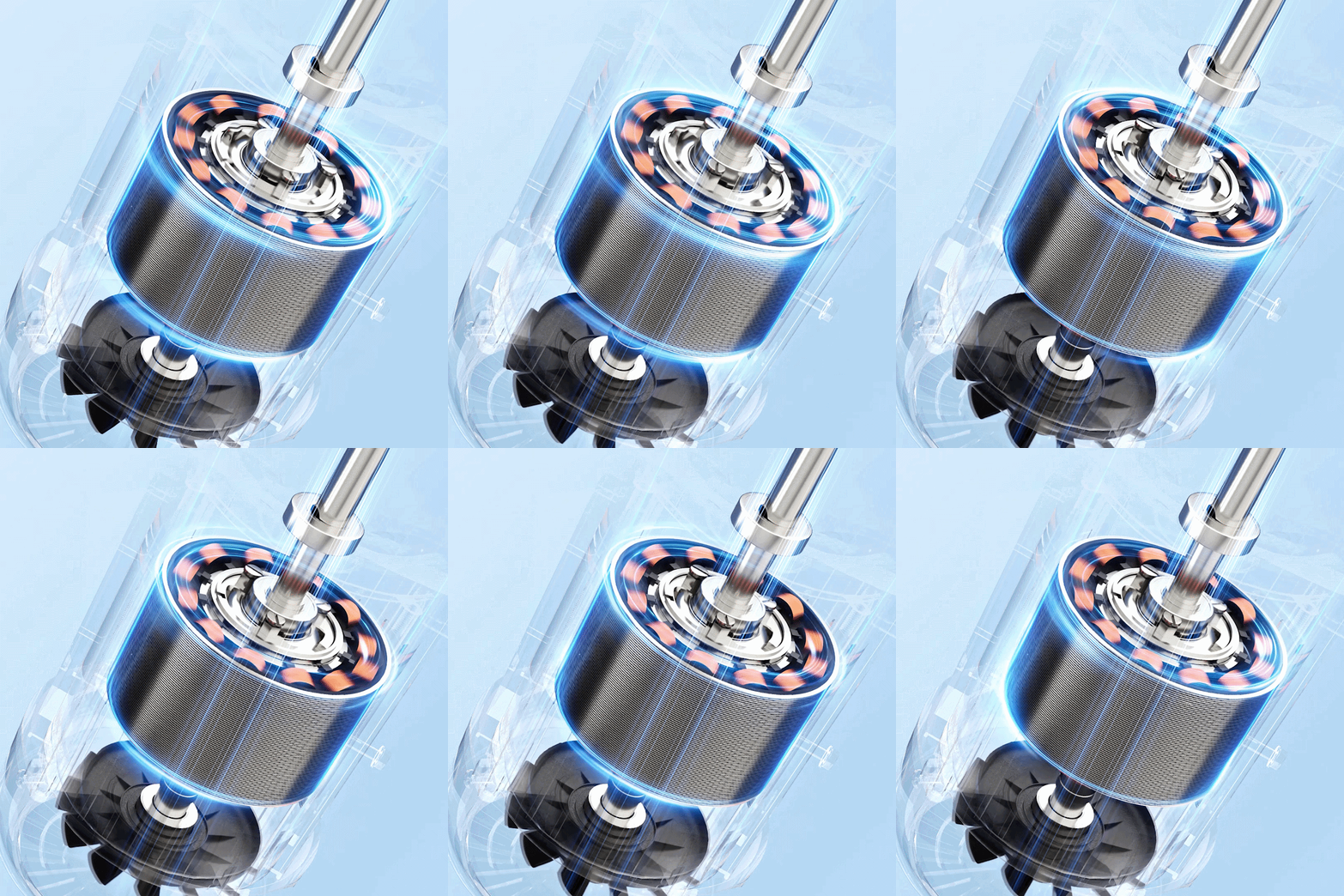
Power That Performs
High-efficiency permanent magnet motor – quiet, compact, responsive, and easy to maintain.
Built for premium use. Variable-speed operation allows smooth adjustment from 1150 to 3000 RPM, with real-time display on the control panel.
Overload protection automatically kicks in when needed to keep things safe.
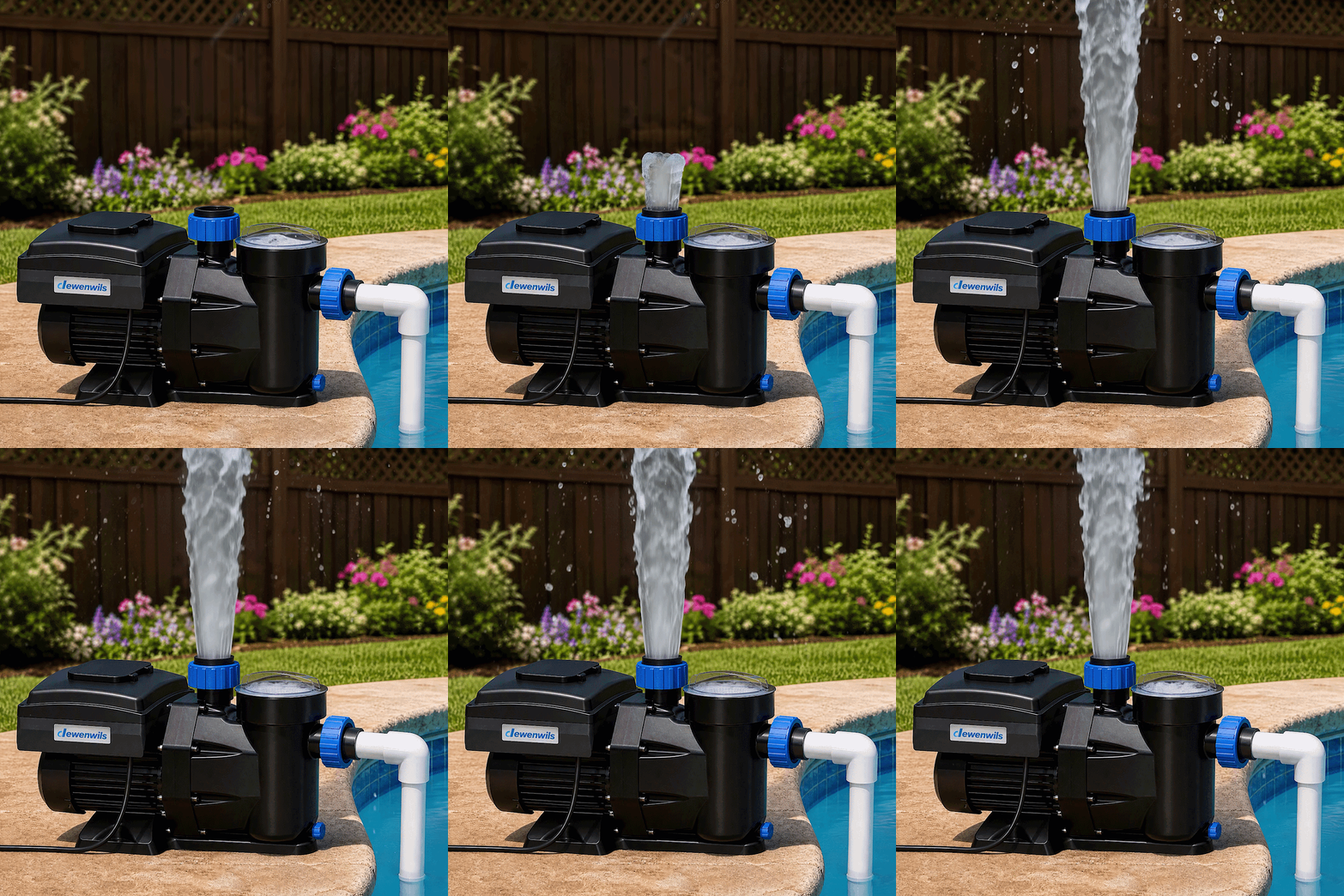
Flow That Fits Your Pool
Max flow: 180 GPM (680 L/min) | Max head: 59 ft (18 m)PP plastic pump body + metal motor housing – durable yet lightweight.
Built-in pre-filter traps large debris before it enters the pump, helping it run smoothly for years.

POOL PUMP SIZING GUIDE




UNDERSTANDING THIS CHART
WHY CHOOSE DEWENWILS

SGS cUS Listed
Certified to UL 1081 & CSA C22.2 No.108 Standards

Sustainability features
This product has trusted-certified sustainability features.
YOU MAY ALSO LIKE

App Control(Wifi) Pool Pump Timer - SHOWT01A
Choose your option

Digital Pool Pump Timer - SHODT01C
Choose your option

Digital Pool Pump Timer - SHODT01B
Choose your option

App Control(Wifi) Pool Pump Timer - SHOWT01F
Choose your option

App Control(Wifi) Pool Pump Timer - SHOWT01C
Choose your option

App Control(Wifi) Pool Pump Timer - SHOWT01D
Choose your option

Choose your option

App Control(Wifi) Pool Pump Timer - SHOWT01E
Choose your option
FREQUENTLY ASKED QUESTIONS
What if there’s an issue with my order or product?
What if there’s an issue with my order or product?
If you experience any issues, simply contact our support team.
We’ll work with you to find a quick and fair solution.
How can I contact customer support?
How can I contact customer support?
You can reach us anytime via the contact form on this page.
Our support team typically responds within 24 hours on business days.
Are your products covered by a warranty or guarantee?
Are your products covered by a warranty or guarantee?
Yes. All our products are backed by a 365-day warranty.
If you experience any quality-related issues within this period, our support team will be happy to help you with a solution.
Questions about Shipping
Questions about Shipping
Q: How long does shipping take?
A: Orders are typically processed within 1–2 business days.
Delivery times vary by location, but most orders arrive within 3–7 business days.
Q: How much does shipping cost?
A: We offer free shipping on all orders.
No minimum purchase required.
Questions about Variable Speed Pool Pumps:
Questions about Variable Speed Pool Pumps:
1. What Does A Pool Pump Do?
A pool pump circulates water through the filtration system to remove dirt, debris, and impurities, helping keep your pool clean and clear. It is commonly used for in-ground pools, above-ground pools, saltwater pools, and sand filter systems to maintain efficient water circulation and reliable pool performance.
2. How Do Swimming Pool Pumps Work?
A swimming pool pump draws water from the pool, pushes it through the filtration system to remove dirt and debris, and then returns clean water back into the pool. By continuously circulating water, the pump helps maintain proper water flow, improve filtration efficiency, and keep your pool clean and balanced.
3. How To Choose A Pool Pump?
Choosing the right pool pump depends on your pool size, required flow rate, plumbing system, and power needs. Consider factors such as horsepower (HP), flow rate (GPM), head height, voltage, and pipe size to find a pump that matches your pool setup. For most residential pools, a 1.5HP variable speed pump is suitable for everyday filtration, while a 3.0HP variable speed pump is ideal for larger pools or systems requiring higher flow performance.
4. How Much Is A Pool Pump?
Variable speed pool pumps typically range from $500 to $1,500, depending on the horsepower, flow capacity, smart features, and overall performance. While the upfront cost is higher than a single-speed pump, the energy savings can help reduce operating costs over time, making it a worthwhile long-term investment.
5. How To Install A Pool Pump?
Installing a pool pump typically involves turning off the power, removing the existing pump, connecting the new pump to the plumbing system, completing the electrical wiring, priming the pump, and testing the system for proper operation. DEWENWILS Variable Speed Pool Pumps are designed for easy replacement with a compact body, 1.5" and 2" union connections, and standard 220–240V wiring, making them compatible with most existing residential pool systems and minimizing installation effort. For safe and reliable operation, 220–240V pool pumps should be installed by a qualified electrician in accordance with local electrical codes.
6. How To Prime A Pool Pump?
To prime a pool pump, turn off the power, fill the pump strainer housing completely with water, securely replace the lid, open any necessary valves, and then restart the pump. The pump should begin drawing water and expelling air from the system until a steady water flow is established. Proper priming helps prevent dry running, protects the pump from damage, and ensures efficient water circulation.
7. How To Drain A Pool Using A Pool Pump?
To drain a pool using a pump, connect the pump’s discharge line to a suitable drainage area, open the necessary valves, and run the pump according to the manufacturer’s instructions. Monitor the water level during draining and avoid running the pump dry after the pool is emptied. Always follow local regulations for pool water disposal and ensure the drainage location can safely handle the discharged water.
8. How Much Electricity Does A Pool Pump Use?
The electricity usage of a pool pump depends on factors such as motor horsepower, operating speed, run time, and pool system requirements. Traditional single-speed pumps typically consume more energy because they run at full power, while variable speed pool pumps can reduce energy consumption by adjusting RPM based on circulation needs. DEWENWILS Variable Speed Pool Pumps feature adjustable speeds from 1,150 to 3,600 RPM and can help save up to 80% on energy costs compared with traditional single-speed pumps.
9. How Long Should I Run My Pool Pump?
Most residential pool pumps should run around 8–12 hours per day to maintain proper water circulation and filtration. The ideal runtime depends on factors such as pool size, pump flow rate, water conditions, and usage frequency. With a variable speed pool pump, you can run the pump at lower speeds for longer periods during daily filtration and increase the speed when additional circulation is needed, helping maintain clean water while reducing energy consumption.
10. How Often Should I Run My Pool Pump?
A pool pump should typically run every day to maintain proper water circulation and filtration. Most residential pools require around 8–12 hours of daily operation, depending on factors such as pool size, pump capacity, weather conditions, and usage frequency. A variable speed pool pump allows you to adjust the operating schedule and speed, using lower speeds for routine filtration and higher speeds when additional circulation is needed.
11. How Long Should I Run My Pool Pump In Summer And Winter?
● Summer: During warmer months, pool pumps typically need to run longer, usually around 8–12 hours per day, to maintain proper circulation, support filtration, and help keep water clean with increased pool usage and higher temperatures.
● Winter: During colder months, pool pump runtime can usually be reduced to around 4–8 hours per day, depending on your climate, water temperature, and pool conditions. In areas with freezing temperatures, proper circulation is important to help prevent plumbing issues.
12. How Long Do Pool Pumps Last?
A pool pump typically lasts around 8–12 years, depending on factors such as pump quality, operating hours, water chemistry, maintenance, and installation conditions. Regular maintenance, proper water balance, and avoiding dry running can help extend the pump’s service life.
A variable speed pool pump can also help reduce motor stress by operating at optimized speeds, which may contribute to longer-lasting and more efficient performance.
13. How To Clean A Pool Pump Filter?
To clean a pool pump filter, first turn off the pump and release the system pressure. Remove the filter according to the manufacturer’s instructions, rinse away debris, and inspect the filter for buildup or damage before reinstalling it. Regular filter cleaning helps maintain proper water flow, improve filtration efficiency, and reduce strain on the pool pump system.
14. How To Clean A Pool Pump Impeller?
To clean a pool pump impeller, first turn off the power and disconnect the pump from the electrical supply. Remove the pump cover and carefully access the impeller to clear any leaves, debris, or buildup that may block water flow. After cleaning, reassemble the pump, ensure all connections are secure, and check for proper operation. Regular impeller maintenance helps maintain efficient circulation and prevent reduced pump performance.
15. What Does EOL Mean On A Pool Pump?
EOL stands for End of Life and indicates that a pool pump or one of its components has reached the end of its expected service life or may require inspection. If an EOL message appears, check the pump’s operating condition, including motor performance, error codes, and maintenance status. Regular maintenance and proper operation can help extend the lifespan of your pool pump.
16. How To Hide A Pool Pump?
A pool pump can be hidden by using a dedicated pump enclosure, decorative screen, or landscaping elements while maintaining proper ventilation and easy access for maintenance. Avoid fully sealing the pump in an enclosed space, as adequate airflow is necessary to prevent overheating and ensure reliable operation. Place the pump on a stable, dry surface with enough clearance around the unit for inspection and servicing.