Low Voltage Transformers
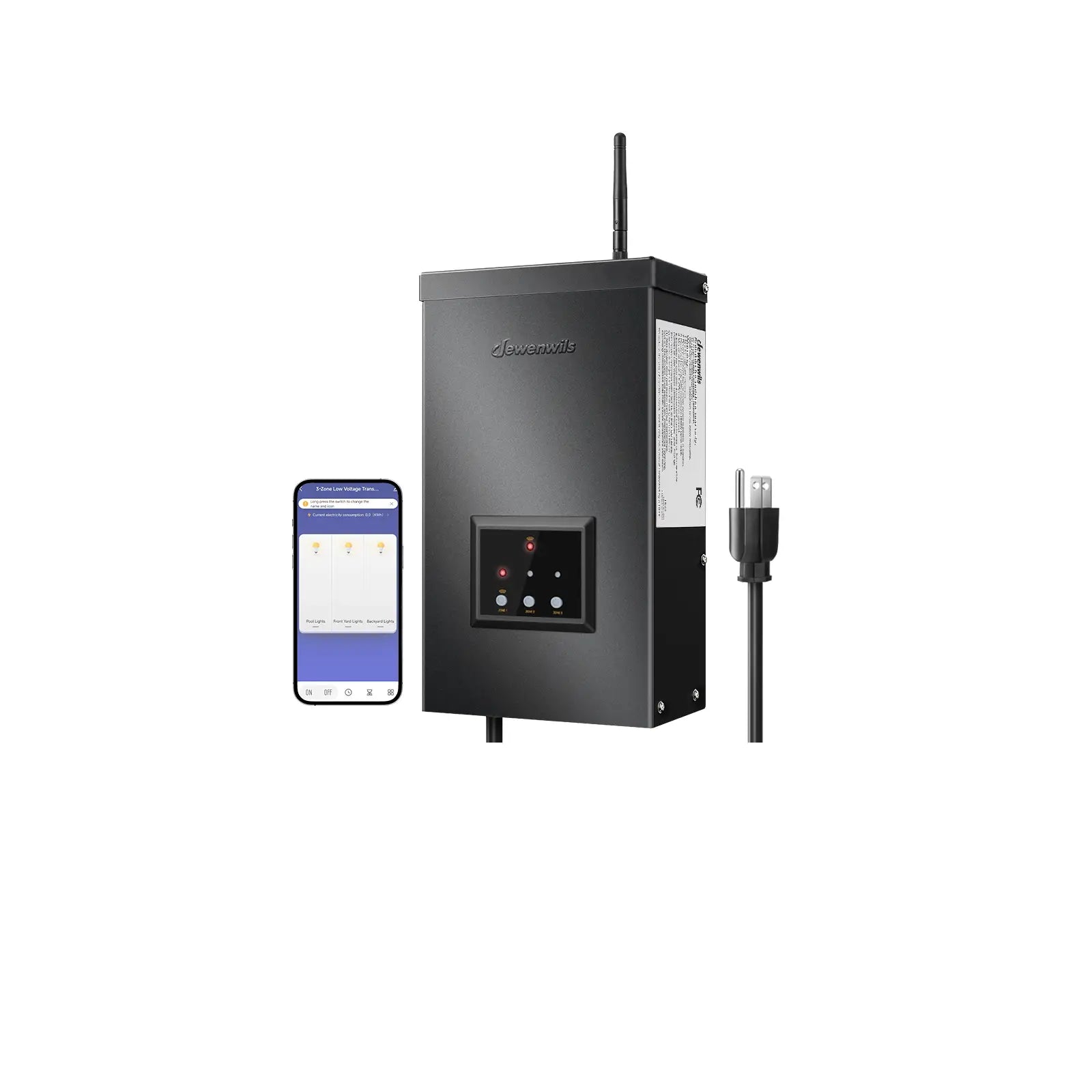
Low voltage transformers convert standard 120V household power into safe, stable low voltage(12V, 13V, 14V, 15V), ensuring reliable performance and long-lasting operation for landscape lighting systems.

 365-Day Warranty
30-Day Return
Free Us Shipping
365-Day Warranty
30-Day Return
Free Us Shipping
 365-Day Warranty
30-Day Return
Free Us Shipping
365-Day Warranty
30-Day Return
Free Us Shipping

60W Low Voltage Landscape Lighting Transformer - SHDLT02A
Choose your option

App-Controlled(Wifi) 300W Low Voltage Landscape Lighting Transformer - SHSLT05W
Choose your option

120W Low Voltage Landscape Lighting Transformer - SHDLT03A
Choose your option

DEWENWILS 300W Matter Landscape Lighting Transformer, 120V AC to 12V/14V AC, WiFi Low Voltage Transformer, 3 Independent Outputs, Compatible with Alexa, Google Assistant - SHWLT05M
Choose your option

200W Low Voltage Landscape Lighting Transformer - SHOSL04B1
Choose your option

200W Low Voltage Landscape Lighting Transformer - SHCLT04H
Choose your option

300W Low Voltage Landscape Lighting Transformer - SHALT05E
Choose your option

300W Low Voltage Landscape Lighting Transformer - SHALT05A
Choose your option

150W Low Voltage Landscape Lighting Transformer - SHCLT03A
Choose your option

App-Controlled(Wifi) 300W Low Voltage Landscape Lighting Transformer - SHSLT05Y
Choose your option

App-Controlled(Wifi) 300W Low Voltage Landscape Lighting Transformer - SHCLT05X
Choose your option

Remote-Controlled 60W Low Voltage Landscape Lighting Transformer - SHOSL02R
Choose your option
Recommended For You
Not sure which transformer you need? Filter by wattage, capacity, or features—find the right match in seconds.

600W Low Voltage Landscape Lighting Transformer - SHOSL08ERegular price
$23999
Sale price
$23999
Regular price
-28%
|

App-Controlled(Wifi) 300W Low Voltage Landscape Lighting Transformer - SHWLT05A1Regular price
$15999
Sale price
$15999
Regular price
-30%
|

App-Controlled(Wifi) 200W Low Voltage Landscape Lighting Transformer - SHWLT04A1Regular price
$11999
Sale price
$11999
Regular price
-36%
|

150W Low Voltage Landscape Lighting Transformer - SHSLT03ARegular price
$7999
Sale price
$7999
Regular price
-37%
|
|
|
600W |
300W |
200W |
150W |
|
|
120V AC, 60Hz |
120V AC, 60Hz |
120V AC, 60Hz |
120V AC, 60Hz |
|
|
12/14V AC, 60Hz |
12V/14V AC, 60Hz |
12V AC, 60Hz |
12/15V AC, 60Hz |
|
|
6 |
3 |
3 |
1 |
|
|
Manual |
App-Controlled(Wifi) |
App-Controlled(Wifi) |
Manual |
|
|
|
|
|
|
|
|
10.24 x 7.09 x 16.93 in |
9.45 x 10.24 x 16.54 in |
8.66 x 14.17 x 15.35 in |
6.69 x 10.51 x 9.84 in |
|
|
18.74 lbs |
11.91 lbs |
8.82 lbs |
7.72 lbs |
Pairs Well With:

Low Voltage Landscape Lights - (spotlights)
DEWENWILS AC/DC 12V Low Voltage Landscape Lights, 14W 540LM 3000K Low Voltage LED Spotlight, IP65 Waterproof Landscape Lighting for Yard, Driveway, Lawn (4 Pack)-HGSL05A
Choose your option

Low Voltage Landscape Lights - (pathway lights)
Low Voltage Pathway Lights, 3W 150 LM 3000K 16.5“ Tall LED Landscape Lights, 12V AC/DC 50,000Hrs Waterproof Aluminum Housing Outdoor Landscape Lighting for Path, Yard, Garden-HGSL06A
Choose your option

Low Voltage Landscape Lights - (pathway lights)
6Pack Low Voltage Landscape Lighting, 3.2W 3000K 50,000Hrs Electric LED Pathway Lights Wired, 12V Waterproof Outdoor Landscape Path Lights, Modern Aluminum Housing for Driveway Garden-HGSL09B
Choose your option

Low Voltage Landscape Lights - (pathway lights)
Low Voltage Landscape Lighting, 12V 3W 3000K Warm White, Electric Outdoor Bollard Lights with Connectors, Waterproof LED Pathway Driveway Walkway Lights Wired for Yard Garden-HGSL35A
Choose your option

Choose your option

DEWENWILS 2 Pack Wall Light Fixture Wall Mount, Gooseneck Barn Light, Wall Lantern Sconce, Porch Light for House Frontdoor Entryway Garage-HOWL02D
Choose your option

DEWENWILS Dusk to Dawn Outdoor Wall Light Fixture Wall Mount, Black Roman 17.7" H Exterior Wall Lantern Porch Light, Waterproof Outdoor Wall Sconce Lighting Lamp for House Garage Doorway-HOWL06J
Choose your option

DEWENWILS Motion Sensor Outdoor Wall Lights, 2-Pack Dusk to Dawn Exterior Lantern Fixture, Roman Vintage Wall Mount Waterproof Porch Light, Water Ripple Glass, for Front Door Garage Patio-HOWL07D
Choose your option


Transformers for your landscape or garden lighting
Choosing a landscape lighting transformer with a timer extends functionality, enhancing safety and beauty

Pool Lights

Pathway Lights

Landscape Lights
Learn More About Low Voltage Transformer


Frequently asked questions
What if there’s an issue with my order or product?
What if there’s an issue with my order or product?
If you experience any issues, simply contact our support team.
Support Email: service@dewenwils.com
We’ll work with you to find a quick and fair solution.
Questions about Shipping:
Questions about Shipping:
Q: How long does shipping take?
A: Orders are typically processed within 1-2 business days.
Delivery times vary by location, but most orders arrive wvithin 3-7 business days.
Q: How much does shipping cost?
A: We offer free shipping on all orders.
No minimum purchase required.
Questions about After-Sale:
Questions about After-Sale:
Q: How can I contact customer support?
A: You can reach us anytime via the contact form on this page. Our support team typically responds within 24 hours on business days.
Support Email: service@dewenwils.com
Q: What if there’s an issue with my order or product?
A: If you experience any issues, simply contact our support team. We’ll work with you to find a quick and fair solution.
Q: Are your products covered by a warranty or guarantee?
A: Yes. All our products are backed by a 365-day warranty. If you experience any quality-related issues within this period, our support team will be happy to assist you.
Questions about Low Voltage Transformers
Questions about Low Voltage Transformers
1. What Is a Low Voltage Transformer?
A low voltage transformer converts standard 120V AC household power into a safer low-voltage output—typically 12V or 14V AC, or 12V DC—required by landscape lighting systems.
●AC transformers (e.g., DEWENWILS 300W Wi-Fi or 600W models) are commonly used for pathway lights, spotlights, and larger landscape layouts.
●DC transformers (e.g., 120W DC or 60W Wi-Fi DC models) are designed for LED fixtures that require a stable 12V DC input.
By stepping down voltage, the transformer:
●Protects lighting fixtures from overvoltage
●Ensures consistent brightness across long cable runs
●Meets low-voltage landscape lighting safety standards
It acts as both the power source and control center of the entire outdoor lighting system.
2. How to Connect and Use the DEWENWILS Low Voltage Transformer
DEWENWILS transformers are designed for straightforward outdoor installation?
Installation & Wiring
●Mounting Location:
Install near a GFCI-protected 120V outlet, above ground level, and away from standing water.
●AC Models (e.g., 300W Wi-Fi, 600W with Photocell):
Connect low-voltage lighting cables to the output terminals. Polarity is not critical.
Ensure total connected wattage does not exceed the transformer rating.
●DC Models (e.g., 120W DC, 60W Wi-Fi DC):
Match positive (+) and negative (–) terminals to LED fixtures that require DC input.
Control Setup
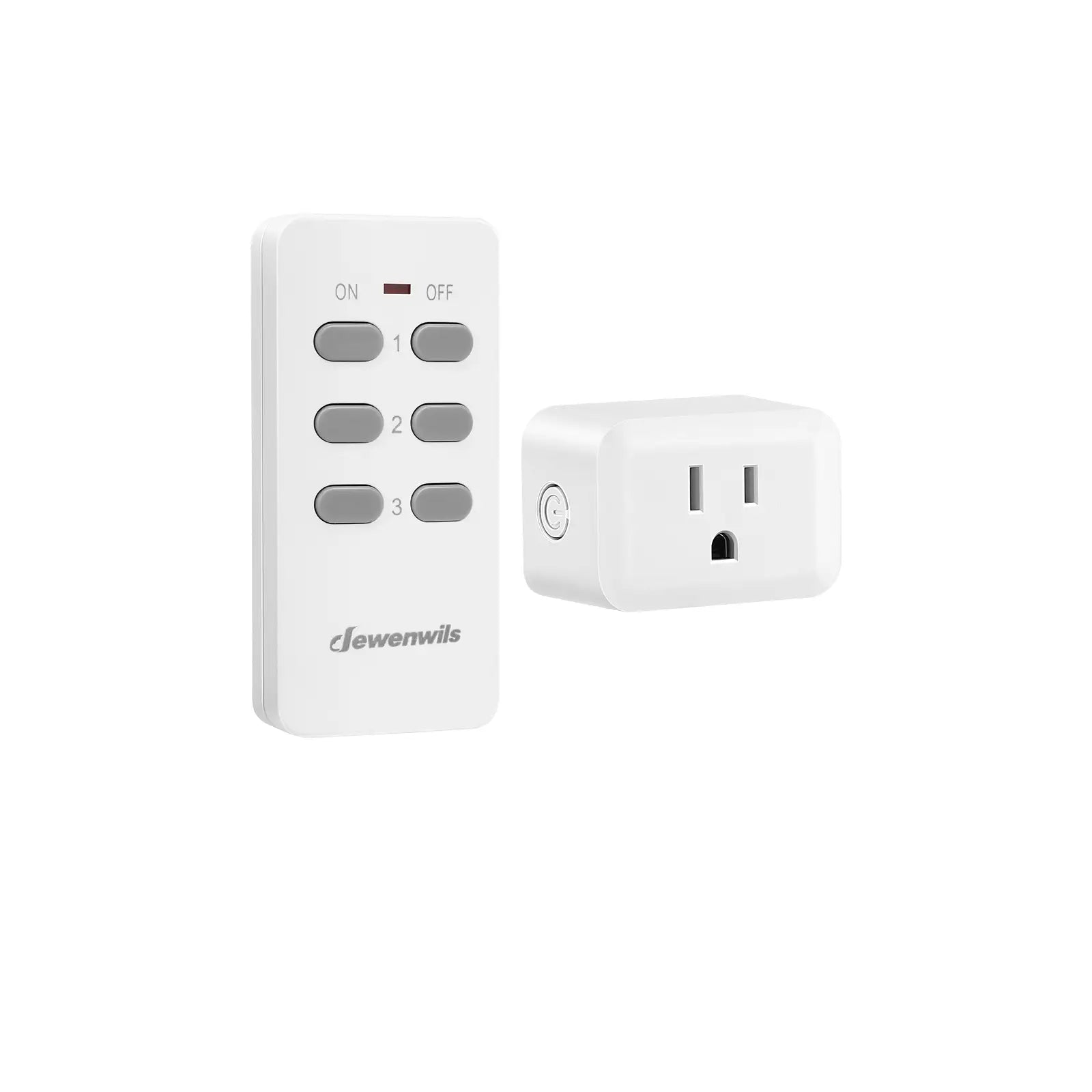
●Remote Control Models: Configure ON/OFF modes and timers using the included remote.
●Wi-Fi / Matter Models: Use the app or voice assistant to set schedules, zones, and automation.
●Photocell Models: Automatically operate from dusk to dawn without manual programming.
Once wired, simply plug in the transformer and configure the desired control mode.
3. How to Choose the Right Electrical Specs (Voltage, Current, Wattage, Wire Gauge)
Voltage Output
●12V / 14V AC:
Best for most landscape lighting systems and mixed fixture types.
●12V DC:
Required for LED fixtures designed for DC input to ensure stable brightness.
Wattage Capacity
●60W–120W: Small gardens, spotlights, or accent lighting
●200W–300W: Medium-sized landscapes or multiple lighting areas
●600W: Large properties or high-density lighting systems
Always select a transformer with 20–30% extra capacity beyond your total load.
Current Load
●Keep total fixture wattage within 70–80% of rated capacity to reduce voltage drop and heat.
Wire Gauge
●Longer cable runs or higher wattage systems require thicker wire (e.g., 14AWG) to maintain even brightness.
4. Does It Support Dimming, Brightness Adjustment, and Lighting Schedules?
Dimming & Brightness
●Transformers do not directly dim lights; brightness depends on fixture design.
●However, Wi-Fi and Matter models allow scheduled ON/OFF control and automation, which can simulate brightness transitions when used with compatible smart systems.
Scheduling Options
●Wi-Fi / Matter Models: Custom schedules, app control, and voice commands.
●Photocell + Timer Models: Automatic dusk-to-dawn operation plus countdown timers.
●Remote Control Models: Multiple preset ON/OFF modes with memory function.
5. Will the Settings Be Saved After a Power Outage?
Yes. Models equipped with a memory function (such as DEWENWILS Wi-Fi and remote-controlled transformers) automatically restore:
●Timer modes
●Schedules
●Zone settings
After power is restored, no reprogramming is required.
6. Is the Photocell Replaceable, and How to Use Auto Light Sensor Mode?
●Sensor Type: Built-in photocell (no external sensor required).
●Applicable Models: 600W with Photocell, 120W DC with Photocell & Timer.
How It Works
●Detects ambient light levels
●Automatically turns lights on at dusk and off at dawn
Installation Tip
Mount the transformer so the sensor is exposed to natural daylight and not influenced by nearby artificial lights for accurate operation.
7. Does It Support Multiple Zones or Independent Zone Control?
Yes, selected DEWENWILS models support independent multi-zone control.
●3-Zone Models:
● Available in 300W Wi-Fi, 200W Wi-Fi, and 200W Matter Smart transformers.Each zone can be:
○Controlled independently
○Scheduled separately
○Assigned different lighting areas (pathways, patios, gardens)
This is ideal for complex landscapes requiring flexible lighting control.
8. Does It Support App Control, Remote Control, and Manual Operation?
DEWENWILS offers multiple control options across its product range:
●App Control: Wi-Fi and Matter models via smartphone apps
●Voice Control: Alexa, Google Assistant, Siri (Matter models)
●Remote Control: Physical remote with up to 200 ft range
●Manual Operation: Onboard buttons or remote interface (model dependent)
This ensures reliable control even if Wi-Fi is unavailable.
9. Which Apps Are Compatible With DEWENWILS Low Voltage Transformers?
●Matter Smart Models (e.g., 200W Matter):
Compatible with Apple Home, Alexa, Google Home, and SmartThings via a Matter-certified hub.
●Wi-Fi Models (60W / 300W):
Compatible with Alexa and Google Assistant through supported DEWENWILS control apps.
Network Requirement:
All smart models operate on 2.4GHz Wi-Fi for optimal outdoor connectivity.
10. DEWENWILS Low Voltage Transformer Standby Input Power Consumption
DEWENWILS low voltage transformers are engineered for low standby energy usage when lights are off but control circuits remain active:
●Smart / Wi-Fi / Matter Models: Typical standby consumption is below 1W (commonly around 0.5W or less) while Wi-Fi or Matter connectivity stays active for remote scheduling and voice control.
●Photocell-only / Timer Models: Without Wi-Fi electronics, standby load is even lower, usually well under 0.5W.
●Remote-only Models: With minimal control circuitry, standby consumption is negligible.
Low standby consumption reduces wasted energy while keeping the transformer ready to respond to control signals or automatic modes.
11. Does DEWENWILS Low Voltage Transformer Use a Toroidal Coil?
Transformer core design varies by output type and power class:
●AC/AC Transformers (300W–600W):
○Toroidal Core: Used in select higher-end AC models to improve voltage regulation, reduce core losses, and minimize heat.
○EI Laminated Core: Used in other AC models to balance cost and performance.
● Both designs deliver stable low-voltage outputs suitable for landscape lights; toroidal cores typically yield slightly lower electromagnetic interference and better efficiency.AC/DC Transformers (120W / 60W / DC Models):
○Some use high-quality switch-mode power supplies (SMPS) for DC output, especially in compact DC units. These provide stable DC voltage with reduced size and heat.
This flexibility allows DEWENWILS to match transformer topology to performance needs and form factor.
12. Is the DEWENWILS Low Voltage Transformer Sensor Built-in or External?
DEWENWILS offers both sensor options depending on model:
●Built-In Light Sensor:
○Integrated photocell in models like 600W with Photocell or 120W DC with Photocell & Timer.
○Advantage: Weather resistance and simpler installation with fewer exposed components.
●External Light Sensor:
○Some Wi-Fi or smart models support an optional external photocell (sold separately) that can be mounted away from the transformer for more accurate ambient light detection.
Installing an external sensor is beneficial when the transformer housing is shaded or affected by artificial light.
13. DEWENWILS Low Voltage Transformer: How to Connect the Wires, and Is It Compatible With Mechanical Timers?
Wiring Steps
1.Turn Off Power: Always start by switching off the circuit at the breaker.
2.Mount Transformer: Near a GFCI outdoor outlet, elevated above ground and water splash areas.
3.Low Voltage Cables:
a.AC Output Models: Connect low-voltage lighting leads to the labeled output terminals. Polarity is generally not critical.
b.DC Output Models: Match positive (+) and negative (–) leads to corresponding transformer terminals.
4.Control Wiring:
a.Remote/Timer Models: Connect and pair remote as instructed.
b.Wi-Fi/Matter Models: Configure app credentials and zones.
Mechanical Timer Compatibility
●Yes, Compatible: You can place a mechanical timer on the 120V input side to cut power at scheduled times.
●Important Considerations:
○Using input-side mechanical timers will disable smart scheduling and photocell automation while power is cut.
○For full smart functionality (Wi-Fi/Matter), rely on the transformer’s internal timers or app scheduling rather than external mechanical control.
14. DEWENWILS Low Voltage Transformer: Is It Compatible With Other Brands of Landscape Lights?
Yes—DEWENWILS transformers are compatible with most landscape lighting brands as long as key requirements are met:
Compatibility Checklist
●Matching Voltage:
○12V/14V AC models → Works with most halogen and LED outdoor lights designed for AC low voltage.
○12V DC models → Designed for LED lights requiring stable DC input.
●Total Wattage Within Capacity: Do not exceed ~80% of transformer rated output.
●Matching Power Type: AC transformer should be used with AC-rated fixtures; DC transformer with DC-rated fixtures.
Common compatible brands include fixtures from Malibu, Kichler, Hinkley, FX Luminaire, and others that conform to standard low-voltage design.
15. DEWENWILS Low Voltage Transformer: What Is the Default State When Plugged In?
The default behavior when powering on varies by control type:
●Wi-Fi / Matter Models (e.g., 60W, 200W, 300W Smart):
○Default to standby/off output awaiting app setup. Lights remain off until the user configures schedules or issues commands.
●Photocell Models (e.g., 600W with Photocell):
○Default to auto dusk-to-dawn mode; lights turn on at low ambient light and off with daylight.
●Remote Control Models (e.g., 120W Remote):
○Default to OFF; use the remote to select an ON mode or timer schedule.
This design ensures predictable behavior regardless of the model selected.
16. DEWENWILS Low Voltage Transformer: What Certifications Does It Have?
DEWENWILS transformers are engineered to meet key electrical safety, environmental, and performance standards:
●FCC Certification: Required for Wi-Fi and smart control electronics to ensure electromagnetic compliance.
●UL / ETL Outdoor Ratings (where applicable): Ensures fire, safety, and outdoor use compliance (check specific SKU).
●Weatherproof Construction: IP-rated housings, sealed enclosures, and UV-resistant materials for reliable outdoor exposure.
●Material Standards: Outdoor power products conform to recognized safety and quality benchmarks for low-voltage lighting systems.
Certification details are clearly marked on individual product spec labels and spec sheets.
17. DEWENWILS Low Voltage Transformer: How Stable Is the Wi-Fi Connection and What Is the Control Range?
Wi-Fi Stability
●2.4GHz Connectivity: All Wi-Fi and Matter smart models operate on standard 2.4GHz Wi-Fi for broad compatibility and better outdoor range compared with 5GHz.
●Mesh Support: Compatible with mesh Wi-Fi systems to extend coverage to outdoor spaces.
●Performance Expectation:
○Strong router signal → Stable app control, instant responsiveness.
○Weaker signal → Occasional delays; consider a Wi-Fi extender.
Control Range
●Remote Models: Up to approximately 200 ft line-of-sight control using the included remote.
●App Control: Effective anywhere within Wi-Fi/Matter network range (home network coverage determines reach).
●Voice Control: Works as long as the transformer is reachable via the home automation hub and network.
This ensures users can manage outdoor lighting reliably from inside the home, patio, or via cloud/smart home routines.